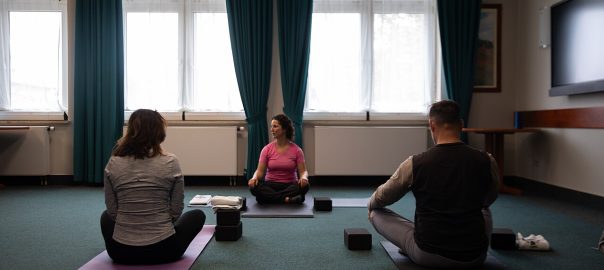
Both practices are free, portable and backed by research, but they work differently and suit different people. Here is a side-by-side look to help you choose a starting point.
This article is general information about everyday health habits, not medical advice. If you have a health condition, are pregnant or take regular medication, talk to your doctor or another qualified health professional before making big changes to your diet, activity or sleep. Figures come from US public health sources such as the CDC, HHS and the Dietary Guidelines for Americans.
When stress starts to build, two of the most reachable tools are meditation and structured breathing exercises. Both are free, both can be done at a kitchen table or a desk, and both have a growing body of research behind them. They are not interchangeable, though. The differences in effort, learning curve and the kind of relief they offer are worth understanding before you commit your limited minutes to one.
What Each Practice Actually Involves
Meditation is an umbrella term for a wide family of practices, some with histories going back thousands of years. Most versions involve holding your mental focus on a single sensation, such as your breathing, a sound, a visual image or a repeated word or phrase. Mindfulness, a common form, means keeping your attention on the present moment without judging what you notice. Structured programs such as mindfulness-based stress reduction add group discussion and strategies for applying the skills to stressful situations.
Breathing exercises are more mechanical. You deliberately control the pace, depth or pattern of your breath, often by counting. Box breathing, for example, uses equal counts for inhaling, holding, exhaling and holding again, and our guide to how to do box breathing in five minutes walks through the whole sequence. Other patterns emphasize slower, longer exhales.
What the Research Says About Stress Relief
For meditation, the National Center for Complementary and Integrative Health (NCCIH) reports that mindfulness-based practices may help with anxiety and depression, performing better than no treatment and possibly as well as established therapies such as cognitive behavioral therapy. Meditation may also reduce blood pressure, anxiety, depression and insomnia. In one randomized clinical trial, a mindfulness-based stress reduction course was found to be about as effective at reducing anxiety as a commonly prescribed anxiety medication.
Breathwork has its own evidence. A meta-analysis of 12 randomized controlled trials with 785 adult participants found breathwork was associated with lower self-reported stress than control conditions, with a small-to-medium effect size, and similar results for anxiety and depressive symptoms. The reviewers noted that most studies had a moderate risk of bias and urged caution about the gap between hype and evidence.
A review of 58 studies on breathing practices found 54 of 72 interventions were effective. The effective ones had shared traits: they avoided fast-only breathing paces, kept sessions to five minutes or longer, and included human-guided training across multiple sessions.
Head to head, a randomized controlled study had people practice daily five-minute sessions of either breathwork or mindfulness meditation for one month. Both improved mood and reduced anxiety. The breathwork groups, especially those using an exhale-focused technique called cyclic sighing, showed greater improvement in mood and a larger drop in respiratory rate.
Time, Cost and Learning Curve Compared
| Meditation | Breathing exercises | |
|---|---|---|
| Core skill | Sustained attention on a sensation or the present moment, without judgment | Controlling the pace and pattern of your breath, usually by counting |
| Session length | Often 10 to 30 minutes as a habit grows; even short sessions count | Five minutes or more per session; shorter sessions were less likely to help in studies |
| Cost | Free, though classes and structured programs exist | Free, and simple patterns need no instruction beyond a good walkthrough |
| Learning curve | Steadier; minds wander a lot at first and focus improves with practice | Faster to grasp, since the count gives you something concrete to do |
| Suits best | People who want a broader practice and can tolerate a quieter, less structured start | People who want clear instructions, quick sessions and a tool for tense moments |
Which Fits Your Personality and Schedule
If your mind resists sitting still with nothing to hold onto, a breathing pattern may be the friendlier entry point. The counting does the organizing for you, and five minutes fits between meetings or before a difficult conversation. If you are more interested in changing your long-term relationship with stress than in getting through a single tense afternoon, meditation’s slower build may pay off more. NCCIH notes that research suggests meditation can help with learning to control attention, regulating emotion and increasing self-awareness.
Your schedule matters too. A parent with 15 fragmented minutes a day may get more from short, structured breath sessions than from a meditation habit that keeps getting interrupted. Whatever you choose, attaching it to something you already do helps it stick; our guide to habit stacking shows how to link a new practice to an existing routine.
How to Try Each One Safely as a Beginner
For breath meditation, Harvard Health suggests finding a comfortable position in a place with few distractions; sitting, standing or walking all work. Start with about 10 minutes in the morning and evening, then build toward 20 or 30 minutes if you want more. Thoughts will intrude, and the skill is acknowledging them without getting annoyed, then returning to the breath. Doing it at the same time each day helps it become a habit.
For breathing exercises, aim for sessions of at least five minutes, and consider guided instruction, since studies found human-guided training and multiple sessions were features of effective practices. If everyday stress is what you are working on, our roundup of healthy ways to handle everyday stress puts these practices in context with sleep, movement and other supports.
Small step: Give either practice two to three weeks of consistent sessions before judging it. Early sessions often feel awkward or restless, and the people who benefit most tend to be the ones who kept going past that stage.
Signs a Practice Is Not the Right Fit Right Now
Meditation and mindfulness are usually considered low risk, but they are not risk free for everyone. In a 2020 review of 83 studies with 6,703 participants, researchers concluded that about 8 percent of participants had a negative effect from practicing meditation, most commonly anxiety or depression, a rate similar to that reported for psychological therapies.
If a session consistently leaves you more wound up, more anxious or more upset than when you started, take that seriously. Options include shortening sessions, switching from silent meditation to a structured breathing count, trying guided instruction instead of practicing alone, or pausing altogether. If stress feels bigger than ordinary daily pressure, or if worry and low mood will not lift, that is a signal to talk with a doctor or mental health professional rather than to push harder on self-help. Our explainer on stress versus anxiety can help you describe what you are feeling before that conversation.
Key ideas
- Both meditation and slow breathing exercises are linked to lower self-reported stress, though the evidence base is still developing.
- In a one-month trial of daily five-minute sessions, breathwork and mindfulness meditation both improved mood and lowered anxiety.
- Reviewers found breathing sessions shorter than five minutes were less likely to help, so give a practice enough time.
- Roughly 8 percent of people in studies reported negative effects from meditation, most often anxiety or depression.
- Neither practice replaces professional care for persistent or severe stress, anxiety or low mood.
Still wondering?
Is breathing exercise easier than meditation for beginners?
Many people find it so, because a structured count gives the mind a clear job. Some researchers have also suggested breath-based practices may be easier for beginners than other forms of meditation, though more research is needed.
How long should a session last to get benefits?
Five minutes is a reasonable minimum. A review of breathing studies found effective practices avoided sessions shorter than five minutes, and a trial using daily five-minute sessions showed benefits over one month.
Can I do both meditation and breathing exercises?
Yes. The two overlap, since many meditation techniques use the breath as a focus. Some people use a few minutes of slow breathing for quick relief and longer meditation sessions for broader stress habits.
What if a practice makes me feel worse?
Stop or scale back and try a different approach. Negative effects such as anxiety were reported by about 8 percent of meditation study participants, and if difficult feelings persist, it is worth talking to a doctor or mental health professional.