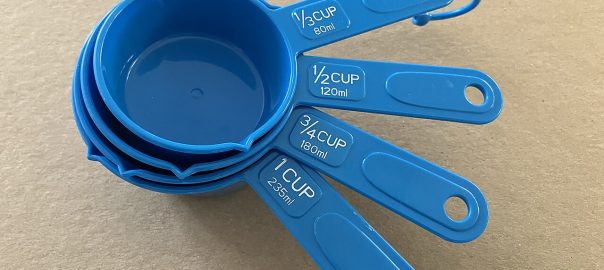
Serving and portion sound like the same word, but they answer different questions. Here is what each one means, where label serving sizes come from, and how to use both without weighing your food.
This article is general information about everyday health habits, not medical advice. If you have a health condition, are pregnant or take regular medication, talk to your doctor or another qualified health professional before making big changes to your diet, activity or sleep. Figures come from US public health sources such as the CDC, HHS and the Dietary Guidelines for Americans.
Ask five people how much pasta makes a dinner, and you will probably get five different answers. That is because the words “serving” and “portion” describe two different things, and food labels, recipes and restaurant plates rarely line up with each other. Understanding the difference turns nutrition labels from confusing to genuinely useful, and it helps you plan meals that fit your own needs rather than a package’s assumptions.
Why the Two Words Get Mixed Up
Both words describe amounts of food, so using them interchangeably is natural. The confusion runs deeper than vocabulary, though. Research on American eating patterns shows that across roughly 40 years, people have bought and eaten larger portions of snacks, sugary drinks and prepared meals, both at home and away from home. Researchers call the result “portion distortion”: when large portions become the norm, they start to feel normal, and a reasonable amount of food can start to look small.
The word “serving” also appears in places that do not mean the same thing. A label serving, a MyPlate serving and the servings listed in a recipe are three different measurements. Sorting out which is which is the first step toward making sense of all of them.
What a Serving Size Actually Is
The serving size printed on a Nutrition Facts label is a standard reference amount that the manufacturer uses as the basis for every number on the panel. It can be expressed in household measures such as cups or ounces, in grams, or as a count of items, like a certain number of crackers. Near the top of the panel, the line showing how many servings the package contains appears directly above the serving size line, which makes it easy to see how many of those amounts the container holds.
Here is the part many people miss: the number printed as the serving size is not telling you how much to eat or drink. It exists so the calorie and nutrient numbers on the label have a consistent reference point, and so you can compare one product with another fairly.
What Counts as a Portion in Real Life
A portion is simply the amount of food you actually serve yourself and eat in a single sitting, no matter where it comes from: your kitchen, a package or a restaurant plate. Your portion may match the label’s serving size, or it may be bigger or smaller.
The cracker example makes the math clear. If a box lists 10 crackers as a serving and you eat 10, your portion equals one serving. Eat 5, and your portion is half a serving. Eat 20, and you have eaten two servings.
Packages do not always help. A can of soup is often labeled as about two servings, but many people eat the whole can in one sitting, which means their portion is the entire can. Neither choice is wrong; the point is simply to know which numbers on the label apply to what you actually ate.
Where Serving Sizes Come From on Food Labels
Serving sizes are not picked at random. A 1990 law, the Nutrition Labeling and Education Act, gave the U.S. Food and Drug Administration the power to require nutrition labels on nearly all packaged foods, and the FDA decides what information appears there, including the serving size. Under FDA rules, serving sizes are based on Reference Amounts Customarily Consumed, figures that describe how much food people generally eat in a single sitting. In other words, a label serving reflects habit, not advice.
The FDA has also updated some serving sizes so labels better match how much people actually eat and drink. Ice cream went from a half cup to two thirds of a cup per serving, and yogurt went from 8 ounces to 6 ounces. So depending on the product, a label serving may now be larger or smaller than it used to be, and older guidance you remember may no longer match the package in your kitchen.
Small step: Read the serving size before the calories. Every number on the Nutrition Facts label, including calories, added sugars and sodium, describes one serving, so the number that matters most is how many servings your portion contains.
How Label Servings Compare to Common Portions
Here is a worked example, offered purely as an illustration. Imagine a frozen lasagna with a serving size of 1 cup and four servings per container. Eat 1 cup, and you get exactly the calories and nutrients printed on the label. Eat 2 cups, half the package, and you are eating two servings, which means twice the calories and twice every other listed nutrient. Finish the whole container, and the numbers quadruple.
The math works in both directions. If your portion is half the serving size, you take half the listed numbers; if it is double, you double them. This is why the serving size matters even though it is not advice. It is the conversion factor between what the label says and what actually landed on your plate.
Simple Ways to Portion Without Weighing Everything
Most people do not carry measuring cups to lunch, and they do not need to. Hand and everyday-object comparisons are close enough for everyday use:
| Food | Visual estimate |
|---|---|
| Meat, poultry or fish (3 ounces) | A deck of cards or the palm of your hand |
| Vegetables or cut fruit (1 cup) | A baseball or your fist |
| Grains or fruit (half a cup) | A cupped hand |
| Cheese (1.5 ounces) | Four stacked dice |
| Oil or nut butter (1 tablespoon) | Your thumb |
| Oil or butter (1 teaspoon) | The tip of your thumb |
Plates can do some of the work too. MyPlate, the federal guide, sorts meals into five food groups: fruits, vegetables, grains, protein and dairy, with daily targets based on a 2,000-calorie plan. The Harvard Healthy Eating Plate takes a similar visual approach without counting anything: make about half your plate vegetables and fruits, about a quarter protein such as fish, poultry, beans or nuts, and use healthy plant oils in moderation. It also sets no fixed number of calories or servings per day, since individual needs vary with age, body size and activity. If the vegetable half feels hard to fill, our easy ways to eat more vegetables can help.
When Portion Size Matters Most
How much you eat matters just as much as what you eat for reaching or staying at a healthy weight, but the right amount differs from person to person, and your daily calorie needs depend on factors like your body size and how active you are. For decisions about your own diet, a registered dietitian or your doctor is the best person to ask.
That said, portions tend to matter most with energy-dense foods and drinks, such as snacks, sweets and sugary beverages, where an extra serving adds calories quickly. If snack time is where your portions drift, our guide to building better snack habits offers simple fixes. Paying attention while you eat helps too; eating slowly and noticing fullness cues, the core ideas in mindful eating, make it easier to stop when you have had enough rather than when the plate is empty. And if sugary drinks are part of your day, the portions there are often far larger than a label serving, so our sugary drink swaps are worth a look.
One last habit ties it all together: glance at the servings per container before you open a package. Knowing whether that bag or bottle holds one serving or four is the difference between the label telling you the truth about your meal and telling you about a quarter of it.
Key ideas
- A serving is the standard reference amount printed on a Nutrition Facts label; a portion is what you actually serve yourself in a single sitting.
- Label serving sizes are based on what people typically eat, not what they should eat, so they are not recommendations.
- If your portion is two servings, the calories and nutrients on the label double; half a serving means half the numbers.
- Your hand and everyday objects, like a deck of cards or a baseball, are close enough to estimate portions without measuring cups.
- Calorie needs vary from person to person, so a registered dietitian or your doctor can help you figure out amounts that fit you.
Still wondering?
Is the serving size on a food label a recommendation?
No. The FDA bases serving sizes on Reference Amounts Customarily Consumed, figures that reflect how much people typically eat and drink in one sitting. Your own needs may be more or less than that amount.
Why did some serving sizes change on newer labels?
The FDA updated some serving sizes so labels better match how much people typically eat and drink. Ice cream went from a half cup to two thirds of a cup per serving, and yogurt went from 8 ounces to 6 ounces.
How do I know how many servings I ate?
Compare your portion to the serving size on the label. Eat twice the serving size and the label’s calories and nutrients double; eat half and they are cut in half.
Do I need a food scale to manage portions?
No. Hand comparisons work well for everyday meals: a palm is about 3 ounces of protein, a fist about a cup, a cupped hand about half a cup, and a thumb about a tablespoon.